Every 28.2 seconds, a property crime is committed in California. If your business is located in a very busy business district, then that’s not just a statistic, it’s a fact that you are dealing with every day. In California, organized retail crime during the past year resulted in more than $4.2 billion in losses to businesses. Yet most business owners are still making their security decisions based on price alone not threat level, not legal exposure, not operational reality. Armed or unarmed? Wrong question. The question is, what does your particular business setting really need? If you miss the mark on that one, there won’t be any insurance policy around to even get you halfway through the next.
What Armed Security Guards Actually Bring to the Table
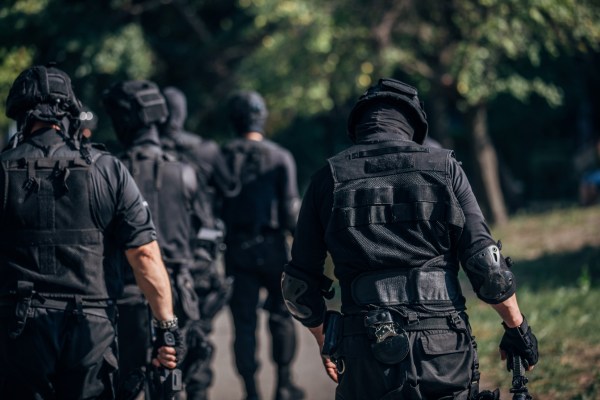
Armed guards are required to carry a licensed gun and are rigorously trained in the art of gun handling and use compared to unarmed guards. In California, they have to get a BSIS exposed firearm license, take a course approved by the Bureau, and undergo a thorough criminal background check. In cash intensive businesses, such as a dispensary, jewelry store, or luxury vehicle dealership, just the presence of an armed officer drives a big change in a criminal’s calculus. In addition to deterrence, armed employees are able to take action against active threats instead of just reporting it. The difference between seconds and minutes in time can make all the difference when it comes to figuring out whether active or passive intervention is required, and law enforcement is just minutes away from getting to the scene.
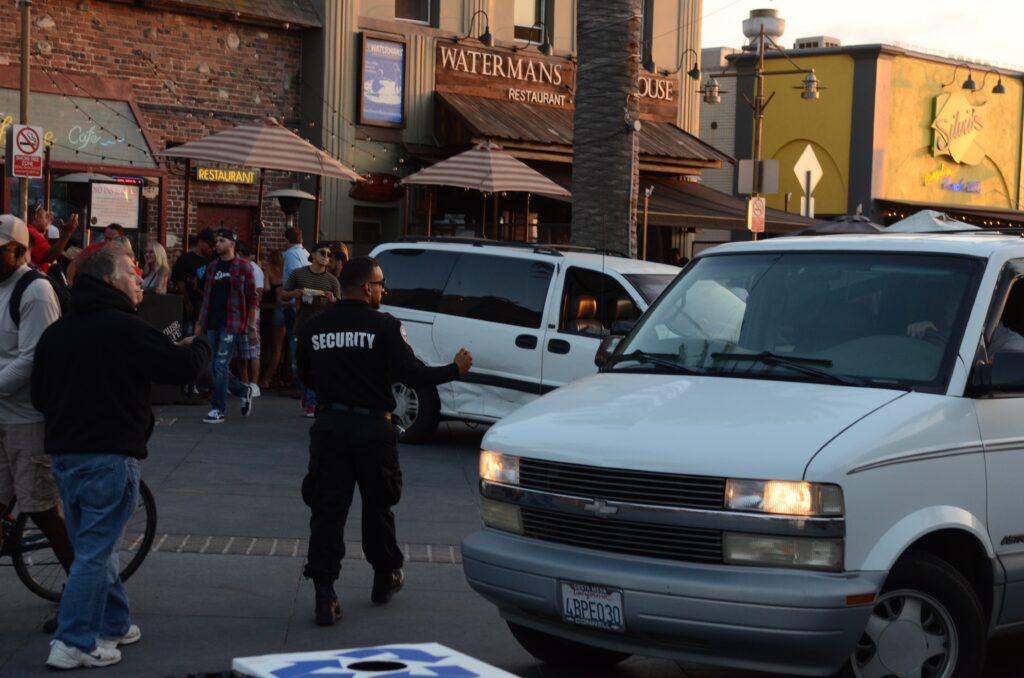
Where Unarmed Security Fits and Where It Doesn’t
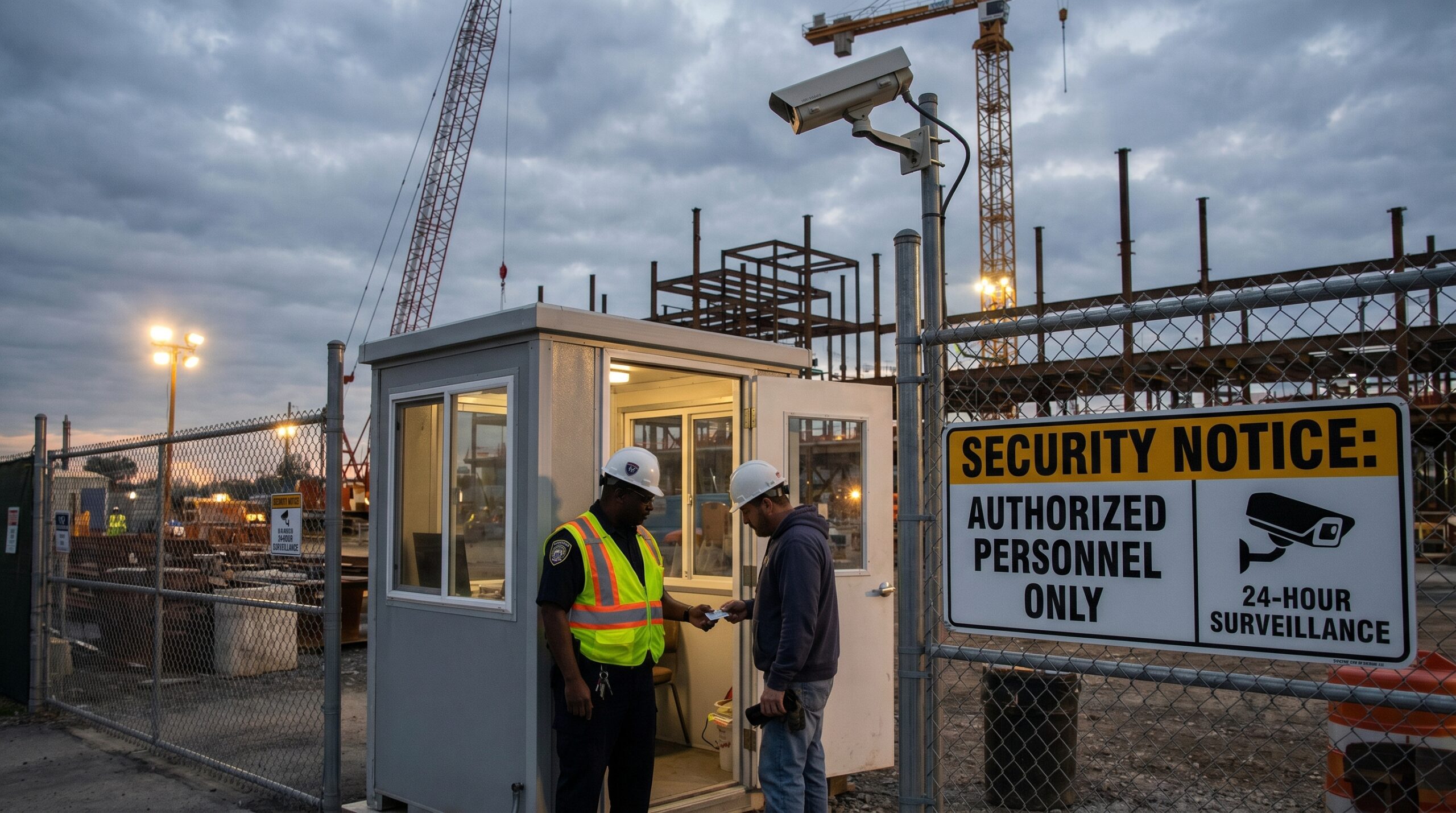
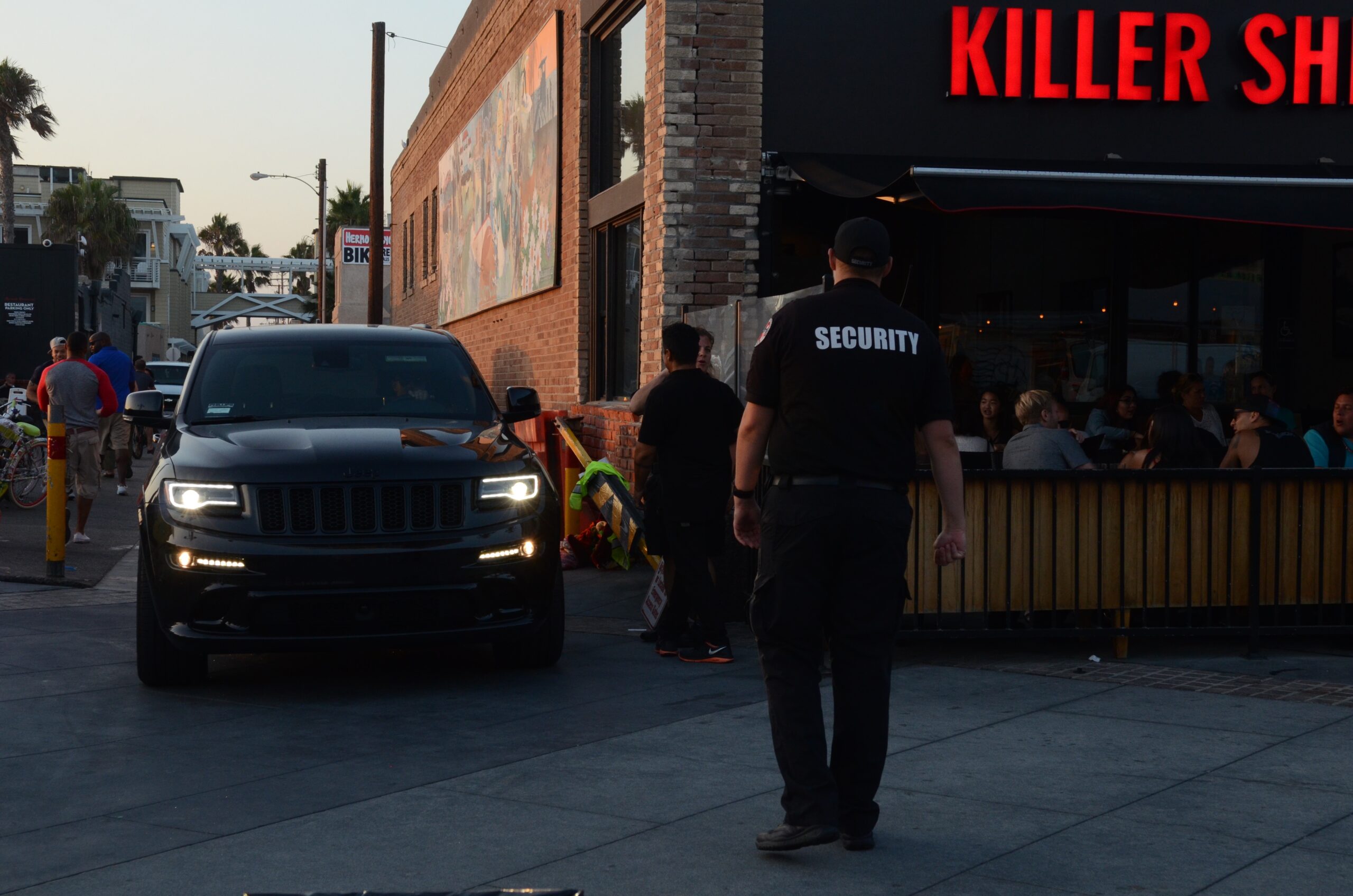
Unarmed guards are required to have a BSIS Guard Card and complete 40 hours of mandatory training. They provide the same end-to-end access control, visitor management, conflict de-escalation, and incident documentation as would an armed guard, but without the liability of carrying a gun. But a brand reality exists here too: A family entertainment center or upscale boutique could discover that having a uniformed guard of security will create enigma amongst clients, not reassurance. But the effectiveness of unarmed coverage has its limits. When a robbery is violent or an active shooter is on the scene, a guard who doesn’t have a gun is virtually reliant on police to help him/her. In some parts of LA County, the response time can be 7 to 11 minutes. As long as time goes by, when everything goes wrong so quickly.
The Legal and Liability Layer You Cannot Ignore
It’s where many business owners make truly costly errors. Even in a completely justifiable situation, where an armed guard fires a gun, your business can still be exposed to civil lawsuits, increased insurance premiums and long-term reputation damage. In the other extreme, imagine if an unarmed guard fails to prevent a crime that your threat environment clearly required to be covered by armed guard, then negligent security claims are on your doorstep. The legal concept of “foreseeable previous incidents,” a high-crime ZIP and serving vulnerable populations all increase the standard of “adequate security” in California courts. This discussion should not be with your security vendor alone. Any premises liability attorney who sees through your exposure prior to signing a contract isn’t an option, it’s a safeguard from a blunder that can cost much more than the security budget.
Industry-Specific Breakdown: Which Businesses Need What
Businesses That Typically Require Armed Guards
- Cannabis dispensaries California law, high-value product inventory, and predominantly cash-based operations create a near-mandatory case for armed personnel on-site
- Jewelry and luxury goods retailers Smash-and-grab incidents have surged dramatically, with organized retail crime rings specifically and repeatedly targeting these store categories
- Financial services businesses Check cashers, payday lenders, and businesses operating near ATM infrastructure face disproportionately high robbery exposure on a daily basis
- Late-night venues and nightclubs Alcohol-fueled confrontations, the likelihood of armed patrons, and volatile crowd dynamics demand trained armed response capability
- Pharmaceutical wholesalers and medical supply warehouses High-value, easily resalable inventory draws consistent and sophisticated criminal targeting year-round
Businesses Where Unarmed Guards Excel
- Corporate campuses and tech offices Professional access control, badge verification, and a polished lobby presence without escalating workplace tension unnecessarily
- Residential apartment complexes Tenants consistently respond better to a community-oriented security presence; armed guards frequently generate fear among residents rather than comfort
- Retail plazas and shopping centers Coordinated loss prevention, customer-facing patrol, and vendor management without the added layer of firearm liability
- Schools, clinics, and social service organizations Populations served are often already vulnerable or traumatized; de-escalation-focused, trauma-informed personnel are categorically more effective here than tactical presence
Cost Differences and What You’re Actually Paying For
Typically, armed security in the greater LA area will cost between $25 and $45 per hour, depending on the complexity of the assignment, the number of patrol vehicles being used, and the level of experience of the guard. The average hourly wage for unarmed guards is between $18 and $28. What is more important is if you are spending the money that is appropriate for your risk tolerance level, not the gap between the two.
Armed guards at a place that is truly low threat are little more than a false sense of security, and a financial cost. The unarmed coverage at a high threat location is a liability that is ripe for turning into a lawsuit. Besides the hourly rate, consider shift duration, static posts and mobile patrol, and critically your provider’s liability insurance coverage limit. California law requires licensed security companies to carry insurance, but the coverage thresholds vary significantly across vendors, and that gap becomes your exposure when something goes wrong.

How to Assess Your Own Risk Profile
Do an honest threat assessment before calling any security company. Get block-level crime data from the LAPD’s crime mapping tool or LA County Sheriff’s crime data publicly available portal; for your exact address. Focus on robberies, aggravated assaults and vehicle crimes in the last year in the previous quarter of a mile. Patterns are more significant than random events.
Then turn inward and audit your own operational vulnerabilities: Are you storing cash on premises overnight? Are workers spending a lot of time working late and without supervisory oversight? Do patrons have visibility of high value stock from the street or parking lot? Are your back door or loading area(s) controlled? Have there been previous un-reported or underreported incidents of theft, vandalism, threats or confrontations? The more “Yes” answers you have, the higher your threat level becomes and therefore the fewer choices you have for security. Having three or more of these factors also operating together in a business environment is a vastly different security requirement from a professional services firm located within a Class A building whose existing security protocols provide 24-hour building security.
Combining Both: The Hybrid Security Model
Not every mid or large company needs to select just one or the other. A combination of armed guards at entry points/cash-handling areas and unarmed guards on interior floors/parking lots/areas in front of customers provides layered protection rather than armed guards everywhere. This model is on the rise in big shopping malls, mixed-use properties, hospital campuses, and entertainment venues whose threat profile can vary based on location inside the property and according to the time of day. Also, it can be optimized in costs without sacrificing coverage where it can really help.
Making the Final Call
No armed or unarmed security is always the answer, it is the one that’s just right for your environment, for your clients, for your legal needs, and for your day to day operating reality. The biggest error business owners make is considering security merely as a compliance issue, and not the strategic extension of risk management that it is, with real legal and financial implications.
Only deal with providers who perform a formal evaluation of the site security prior to presenting a solution. No property walkthrough, no incident history review, no operational audit of your hours and vulnerabilities? They’re selling you a pre-packaged product, not a plan built for your business. For businesses across LA County that need that level of deliberate, customized protection, Supreme Shield Inc brings both armed and unarmed security solutions built entirely around your actual threat profile so you’re never left over-paying for coverage you don’t need or dangerously under-protected where it counts most.