Armed Security is not upgraded security. It is a whole different product designed for a different level of threat, with different liability, at a higher cost on every item, from hourly rate to insurance premium. It isn’t generally required for most businesses. Some companies would have trouble functioning without it. And a meaningful number are currently paying for the wrong one. But the first question most businesses don’t even consider is: what does your actual risk environment need not what your budget wants, not what looks the most serious, but what does the location really need?
What Separates Armed and Unarmed Guards at a Training Level
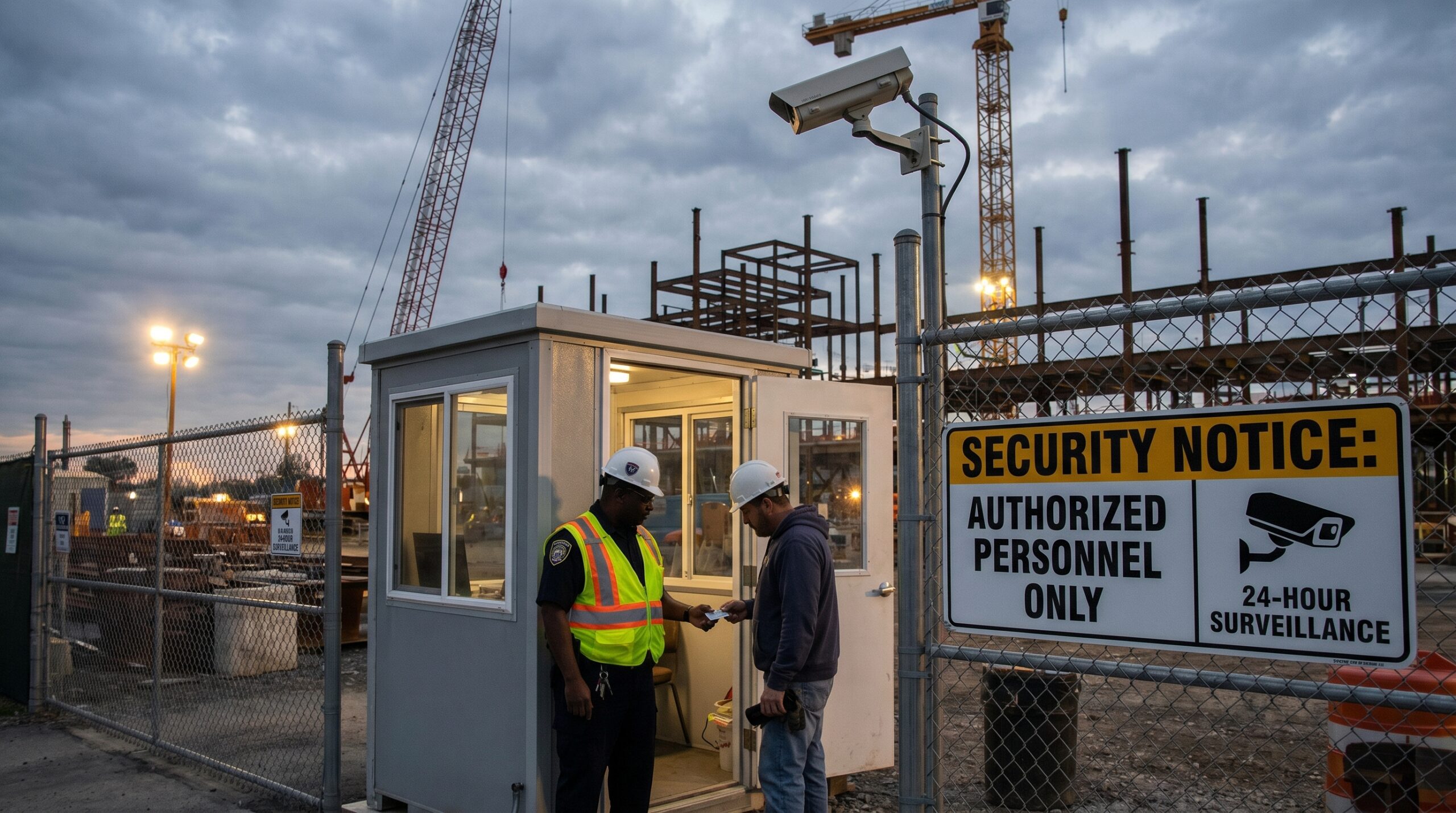
Armed vs unarmed security doesn’t start with equipment – it starts with licensing. Unarmed security officers complete mandatory training covering legal authority, emergency response, access control, and de-escalation procedures. They perform criminal background checks and they are required to keep licenses current at all times by completing continuing education courses required by the state.
Armed officers have all of the above plus an extra layer for the use of firearms. Armed officers are required to attend extra firearms training on legal use of force and the safety of firearms, threat assessment and must qualify with the firearm once a year under supervision at a range. That training gap is due to the fact that a firearm is a deadly tool in a security operation, meaning that there is a much higher level of accountability at each step.
What Unarmed Guards Actually Do
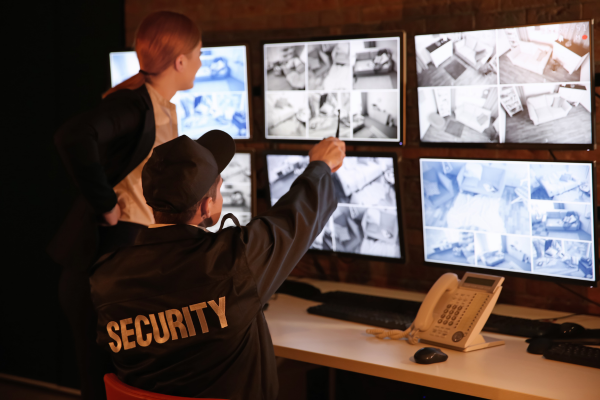
Unarmed security isn’t a lesser service, it’s the right service for most business settings. These are mainly used for the purposes of observation, deterrence by their presence, access control, visitors tracking and incident reporting. They defuse non-violent conflicts, can check on security equipment, control access and liaise with the police when necessary.
Corporate office buildings have the main security requirements of access control, visitor management and employee safety. Unarmed officers supervise lobbies, check credentials, keep an eye on the cameras, and deal with non-violent incidents such as medical emergencies and fire alarms. A gun in a business lobby is more of a problem than a solution. Most of the time, unarmed guards offer the security that the setting requires and is exactly what is needed for most customer facing environments.
What Armed Guards Actually Do
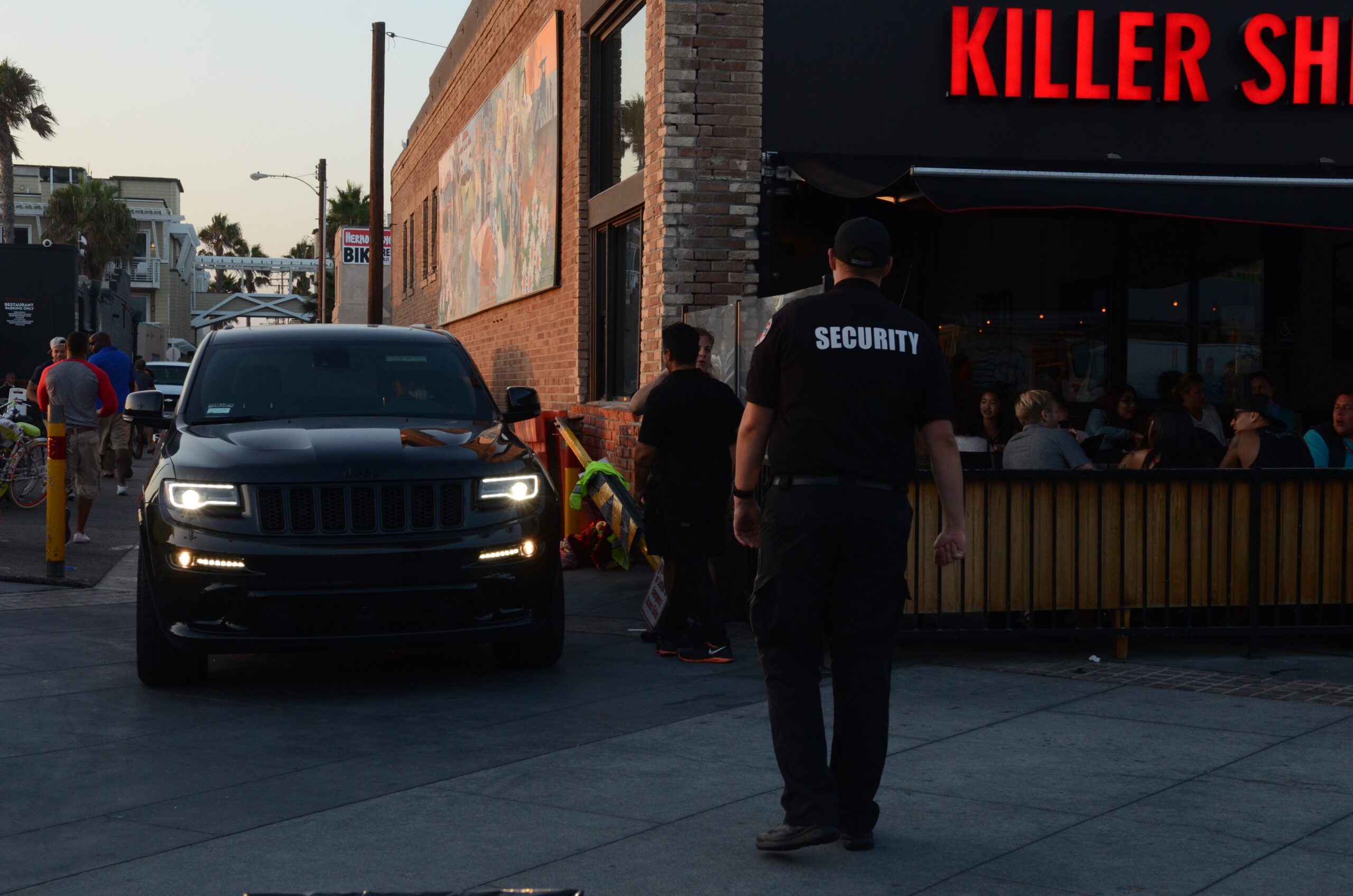
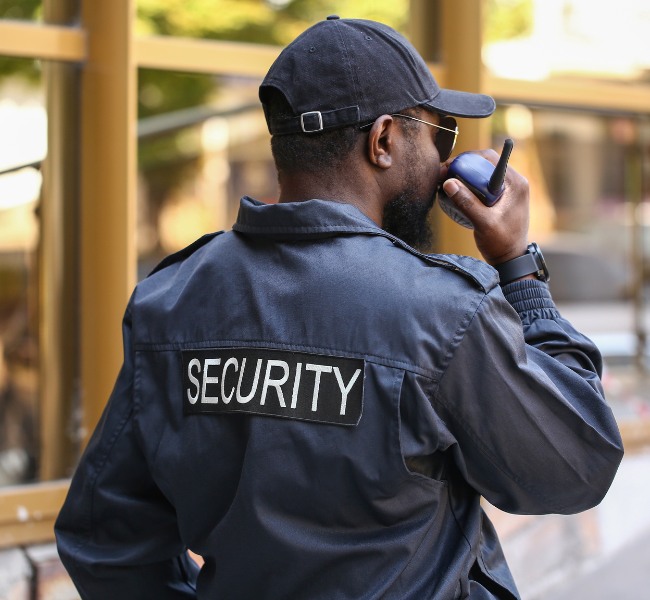
Armed guards can do many of the same things as unarmed officers: access control, patrol, monitor for incident, respond but with one thing added: the lawful power and physical means to intervene in situations where there is an active threat, a violent crime or immediate danger to life and property.
Armed guards are a much more effective deterrent and response in high-risk situations. They’re the right option when the risk of the environment warrants the extra expense, training and liability concerns. The presence of an armed guard changes the calculation for anyone considering a criminal act and that deterrent effect alone produces measurable security outcomes at locations where the risk profile warrants it.
The Cost Difference and What Drives It
In 2026, the average price for security guard services ranges from $20 to $100 or more per hour. Cost for armed guards is higher than unarmed guards due to licensing, training and liability. Specifically, the armed guards will usually cost $35-$60 per hour, while the unarmed guards cost $20-$35 per hour, as armed guards require additional licensing and training, as well as insurance coverage.
The cost gap compounds at scale. The cost of a single, 24/7 armed guard can exceed $500,000 per year, not to mention escalating insurance rates! A mid-sized retail center will spend $200,000 to $300,000 per year on unarmed posts and patrols. The cost of an armed security force is much higher than an unarmed security force, because of the liability issues involved when you have lethal violence equipment on scene.
Where Unarmed Security Is the Right Choice
Corporate Offices and Business Parks
The main requirements are access control, visitor screening and employee safety. The unarmed guards perform these tasks efficiently, and have a professional, approachable demeanor suitable for the surroundings.
Retail Environments
Visible deterrence keeps shoplifting at bay and helps to control customer behaviour without the risk and stress associated with employing armed people in consumer heavy environments. Most retail security issues are covered in the unarmed guard’s ability to observe, deter and report incidents.
Residential Communities and HOAs
Residents want a security force to be more like a presence, not like a military force. Residential access management, patrol coverage and emergency coordination is provided by unarmed guards, without creating a threatening environment.
Schools and Educational Facilities
A security presence accessible to students and staff is a necessary element in student safety. In an educational environment where the goal is to provide a safe and accessible environment, unarmed guards trained in de-escalation and emergency response are appropriate and effective.
Where Armed Security Is the Right Choice
Banks and Financial Institutions
A threat profile of cash handling, high value transactions and increased risk of robbbery can’t be protected by unarmed security. The armed guards at financial institutions serve two purposes: to deter and to be ready to respond when the situation calls for it.
Jewelry Stores and High-Value Retail
An expensive jewellery store may have more expensive, armed security as a deterrent to potential thefts, given that their jewellery is high value. When an armed guard is there, would-be criminals calculate the risks differently than if the guard is not.
Warehouses and Distribution Centers With High-Value Inventory
The cost of armed coverage per month is typically a worthwhile investment for a business with $500,000 in inventory. The volume of cargo theft and organized retail crime against warehouses has been steadily rising, and where larger amounts of inventory value are stored, there is a need for deterrent and response now that only armed security can give.
Nightclubs, Events, and Late-Night Operations
It is a threat environment that unarmed guards can handle to a certain extent: late night business hours, drinking, and managing crowds. Armed security offers the event response capability and deterrent presence that is often required with late night events, when the numbers of attendees, type of venue or previous incident history suggests a higher risk.
Liability: The Factor Most Businesses Overlook
The liability calculation runs in both directions. An incident at a place of business with a true armed threat profile where unarmed security is deployed can present liability issues if it is apparent that the security was inadequate given the known profile of the site. Armed security inflicts liability risk in terms of use-of-force incidents, insurance premiums, and reputation.
You can end up paying for the wrong guards for your need or end up exposing yourself dangerously by not having the right one installed. It’s not a question of opinion or preference, it’s a question of threat assessment, risk tolerance, legal responsibility and operational needs. The one factor that is most important to avoid liability on either side of the equation is a documented threat assessment that drives the security deployment decision.
The Hybrid Approach: When One Type Is Not Enough
Both are required at certain locations. An institution could have unarmed guards throughout most of the hospital campus, patient facing areas and common spaces, and armed guards in the emergency department and at late night entrances. An unarmed guard force could be employed at a large retail facility to provide coverage for the floors while armed guards would be hired to work at cash offices and after-hours access points.
Typically, hybrid security results in a 20 to 40 percent cost savings, along with enhanced coverage. An armed-only and unarmed-only deployment results in less than optimal security results and cost allocation; matching the guard type to the zones of a facility results in more efficient cost allocation and better security results.
Conclusion
Armed or unarmed is not a preference it is a risk-calibration decision that has real consequences in both directions. Unarmed security is always required in most business, and has to be done professionally and consistently. There are indeed some businesses that require armed security and are underproviding for their security needs. A few require both, and these are strategically placed throughout the various areas and shifts.
That’s what Supreme Shield, Inc. does conduct threat assessments, recommend the proper deployment model, and supply the correct licensed/qualified personnel to execute the model in every environment they cover.